


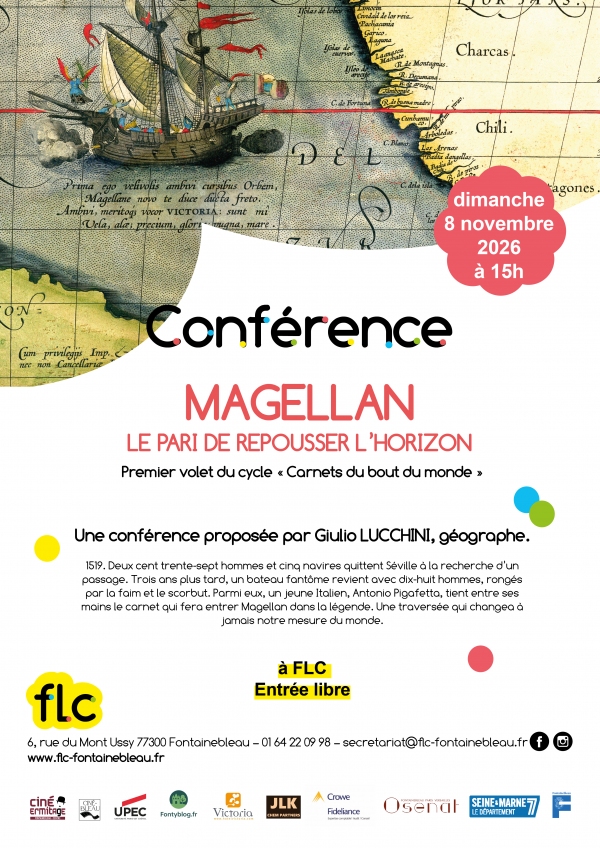

Visit 1519, 237 men spread across five ships set sail from Seville with a single-minded determination: to find a route westwards. Three years later, only one ship returned to port, with eighteen survivors ravaged by hunger and scurvy. Magellan, for his part, did not make the return journey. What remains of the expedition is largely contained in a notebook, that of a young Italian who had signed on board, Antonio Pigafetta.
It is this account that the geographer Giulio Lucchini is coming to tell the story at FLC, at the Maison des Associations. A story of changing maps, unknown seas and men who stake their lives on a hunch. The poster sets the tone: a detail from an old map by Ortelius, showing a ship with all sails set at the edge of the known world.
This lecture marks the start of the series «Notebooks from the Ends of the Earth» which FLC is launching this season. The concept is appealing: drawing on the accounts left by travellers to understand how our approach to measuring the Earth has changed. For a Sunday afternoon in November, there are worse ways to spend it than crossing the Pacific without leaving Fontainebleau.
Free entry. Further details can be found at the Magellan conference page on the FLC website.
A few words are enough, I reply personally.